
Why illustration still matters in a tech-driven world
 May 22, 2026
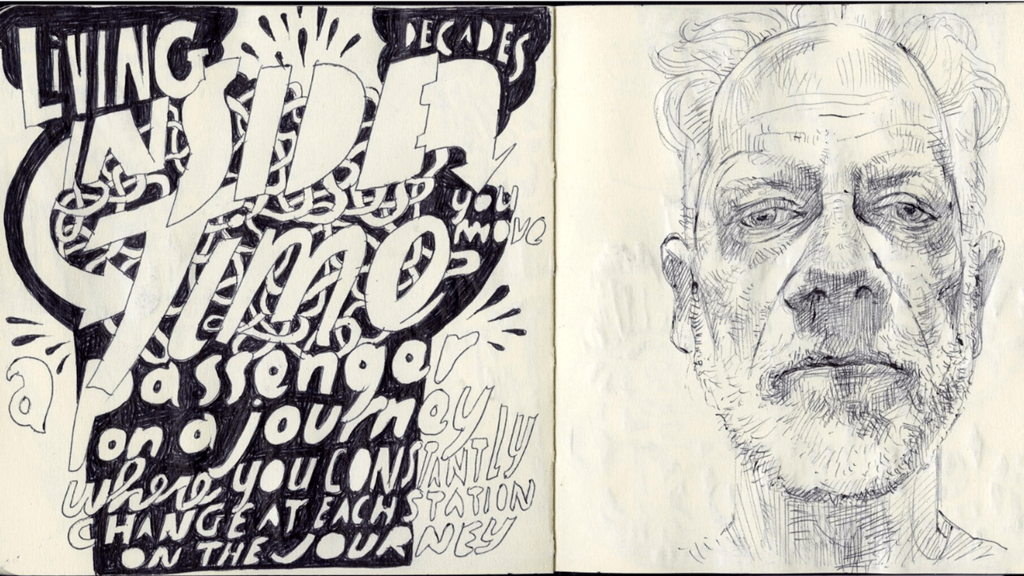
 Illustration matters because it carries something no tool can replicate: a human point of view. In a world that can generate endless images in seconds, the value of art isn’t speed or volume. In illustration, intention shows up in what the artist includes, and just as importantly, what they refuse to include. It’s in their decision to see something in a certain way and make it visible to others.
Good illustration doesn’t just show something at face value. It goes a step further – it makes a choice about what that thing means. It interprets by highlighting what matters, exaggerating what needs attention, or simplifying what might otherwise be missed. And that only happens when the artist stays present in the work, owning the choices that make it human.
Honours Bachelor of Illustration professor and program coordinator Joe Morse knows this intimately, “Every year I'm still learning about how to draw and how to express myself, and I think what you're trying to bring into the classroom is that sense of exploration. We're never done learning. We're never done dreaming.”
“It's important that we are creating an energy that our students can feed on.”
– Joe Morse
For his own work, Morse is celebrating his 30th appearance in the highly regarded art world anthology American illustration Annual, now in its 45th edition. His first awarded entry was 32 years ago. That exposure did not change the quality of his work overnight, but it did change who could see it.
“What's interesting is that this book basically started my career. It launched my international career. So it was a biggie. (American Illustration Annual) is these beautiful, big catalogues and they're really looked at by art directors. What ended up happening is when that first came out, within a week, I got my first job for Rolling Stone magazine.” 
This year’s entry is an illustration of American banker Ben Navarro, whose financial companies have repeatedly been investigated for aggressive debt collection practices. This is Morse’s 4th portrait commission for Forbes featuring billionaires and joins his winning American Illustration image of Elon Musk and Mark Zuckerberg challenging each other with a rock, paper, scissors contest in American Illustration 43.
Illustration is perspective
At its best, illustration does not just depict. It creates perspective, often with a thought-provoking twist or allusion. It invites the viewer to reconsider something familiar, or to engage with something difficult. This becomes particularly evident in editorial contexts, where the work intersects directly with cultural and political narratives.
For Morse, that connection between illustration and public conversation is part of what continues to make the medium relevant. Editorial illustration has always occupied a unique space between journalism and interpretation. It reacts to the world, but it also asks important questions about it. The illustrator is recording events while making decisions about emphasis, emotion and meaning.
That understanding shapes the way Morse approaches teaching at Sheridan. While technical ability is certainly part of the equation for students, curiosity about the world around them also matters just as much. In drawing a connection to his own artistic journey, Morse says students also need to be willing to experiment with their work and their chosen medium. Challenging yourself, being open to change and allowing your work to evolve is critical to success.
“The art of illustration is really about trying to communicate ideas,” he says.
Work that’s unmistakably human
In many ways, his own career becomes a visible example for students of what a sustainable creative life can actually look like. That notion of “overnight success” is often a years-long effort to grow and earn professional credibility.
For Sheridan illustration students, the opportunity of being taught by a team of working professionals who are recognized internationally reinforces that illustration is more than an academic exercise confined to classrooms and critiques. It is a living profession that continues to matter culturally and commercially.
“One of the things that's interesting about being involved in teaching as well as being an artist is that teaching makes you a better artist because you are conscious of these students really looking at your work. They’re asking ‘What are you doing out there? How is that?’ And you're trying to say to them, have this kind of energy. But what are you demonstrating (in the profession)? How are you involved in that?”
As Morse explains, in an era increasingly shaped by automation and artificial intelligence, that lesson is not something that can be packaged as software, or a digital platform. The tools may change as technology continues to evolve. But audiences still respond to work that feels personal, thoughtful and unmistakably human.
“I've been blessed because I've had 30 years of having my work in (American Illustration Annual), of being able to use it each year as a challenge. I use it as a way of pushing myself to try to engage with the world and with my students to stay connected. And I think it's important that we are creating an energy that our students can feed on."
***
If you're passionate about visual storytelling and ready to turn that passion into a career, Sheridan's Honours Bachelor of Illustration gives you the skills, the experience, and the creative foundation to make your mark. This PGWP-aligned program blends traditional studio practice with digital skills in motion, 3D, and web – giving graduates the technical range and visual philosophy to stand out across publishing, film, games, and editorial careers. The program includes a 14-week work placement and culminates in a professional portfolio and website.
Media Contact
For media inquiries, contact Sheridan’s Communications and Public Relations team.