
Sheridan professor brings their brains, brawn and beauty to Canada's Drag Race
 Nov 19, 2026
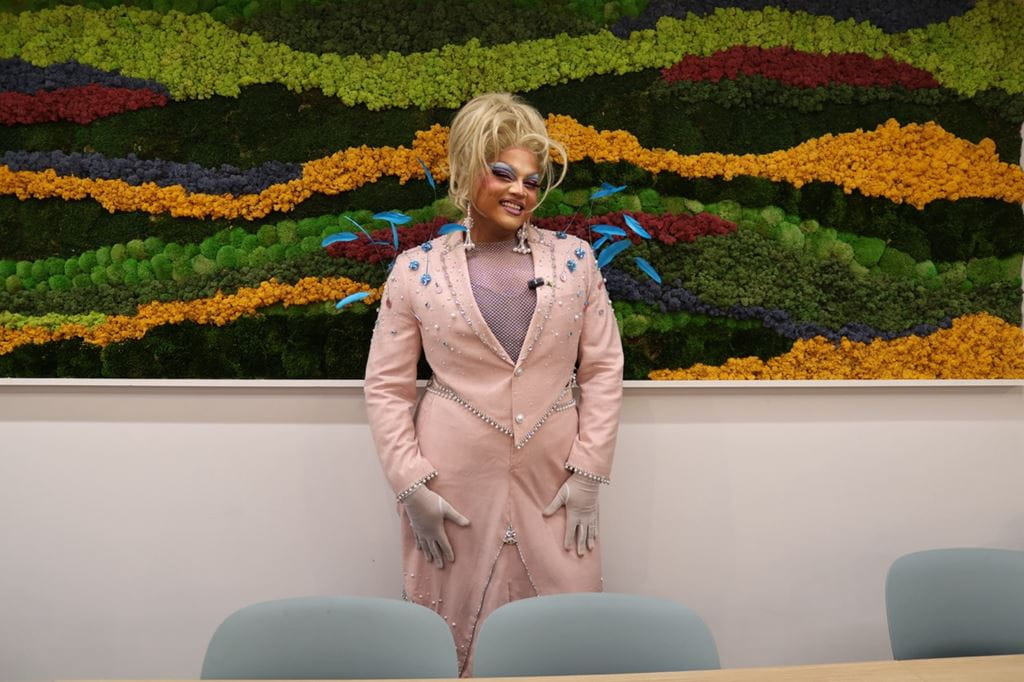
Clad in an elegant pink power suit adorned with rhinestones and gemstone accents, Sheridan creativity professor Chris Ambedkar proudly describes themself as 'the brains, the brawn and the beauty.'
The brains have long been evident and embraced, while the brawn emerged through Ambedkar's achievements as a powerlifter capable of bench-pressing 315 pounds. However, it wasn't until recently that Ambedkar felt comfortable expressing the beauty.
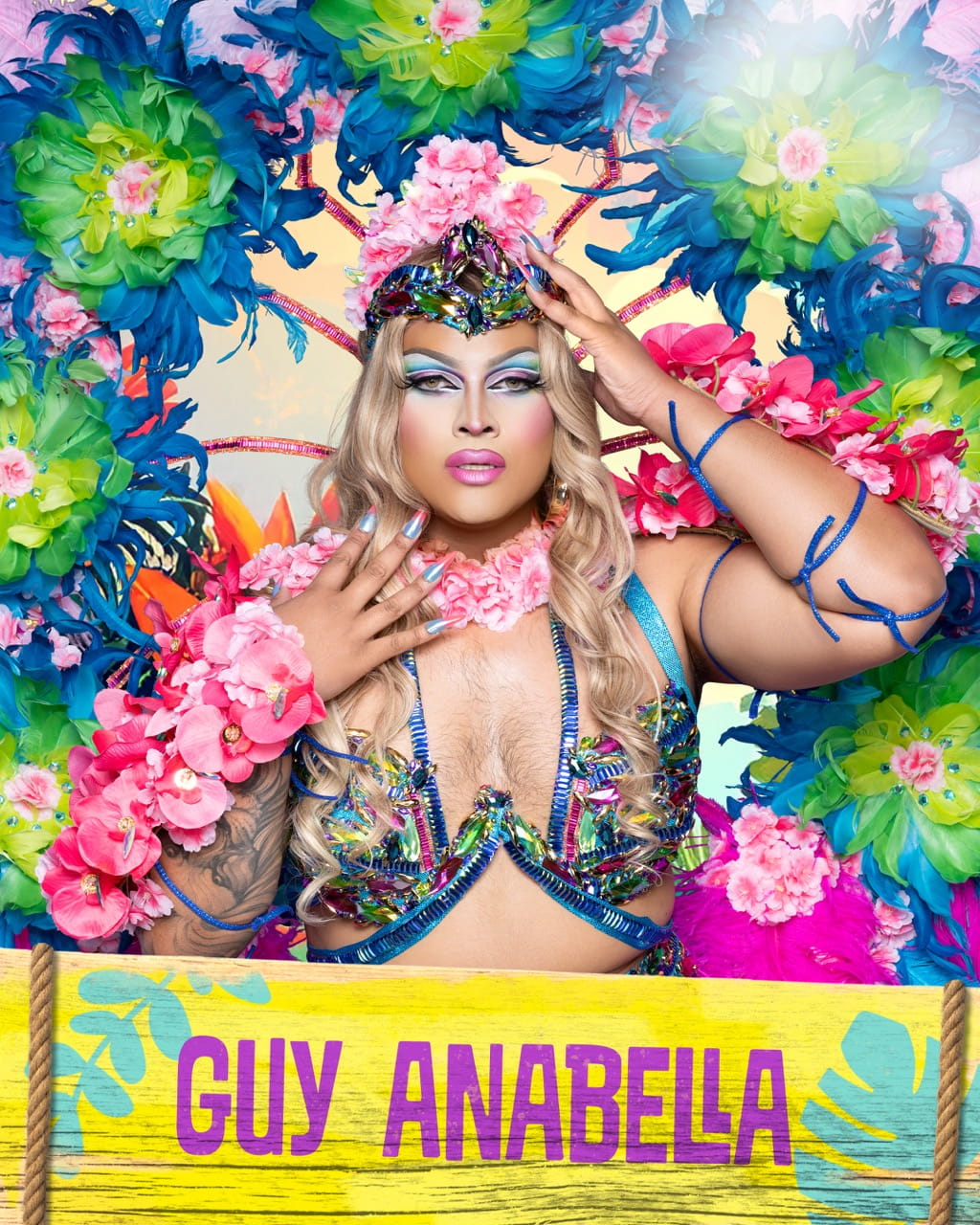
Four years ago, they began dressing in drag in their family living room, performing as Guy Anabella for a small circle of relatives and friends. Guy Anabella has since evolved into a public persona, appearing at drag brunches, pageants, Pride Toronto, Caribbean-themed showcases and several Sheridan events, including the Honours Bachelor of Interaction Design program's year-end showcase in 2024.
Beginning this week, they will appear on their largest platform yet: Season 7 of Canada's Drag Race, now streaming on Crave. The reality series features Canadian drag artists competing in a series of fashion, comedy and performance challenges for the chance to win $100,000 and the title of ‘Canada’s Next Drag Superstar.’
To the 34-year-old Ambedkar, who was once inspired by the sight of fellow Guyanese drag queen Priyanka winning the inaugural Canada's Drag Race in 2020, the opportunity for representation is extremely meaningful.
"What Priyanka was for me, I hope that I can be that to someone else, whether you're Caribbean or not," they say. "Ultimately, my message is all about just being true to yourself and pushing the boundaries of what society says you should be."
In advance of Canada's Drag Race Season 7, we chatted with Ambedkar about their journey in drag, the parallels between drag and creativity, and how their reality TV experience will inform their teaching in Sheridan's new Master of Animation, Games, and Immersive Experiences program.
What prompted you to begin dressing in drag?
As a child, I loved Celine Dion and Whitney Houston and singers that I 'shouldn't be liking.' I was in my room belting out those songs while wearing a bedsheet dress, but doing it secretly because Caribbean culture isn't very open to drag or to homosexuality.
To me, drag is playing with gender rules, what it means to be masculine or feminine or somewhere in between. It's a spectrum, but society tells us we should act a certain way based on our gender. Drag breaks those boundaries while also pushing it to the max, empowering people to express themselves however they want to express themselves.
Being able to express my heritage through drag has also been healing and freeing because a person who I couldn't be as a little boy, I'm now able to be as an adult.
What was it like to be part of Canada's Drag Race?
 Ever since I was a kid, I loved reality TV: shows like Survivor, The Amazing Race and Big Brother. When I first saw Canada's Drag Race, I loved that too. Reality TV brings together a cast of people who all have a different perspective on life, and you see them interact in very unique ways. There's drama, and we all love watching the drama, but there's also beautiful moments of people sharing stories of who they are and what they're representing.
Competing on Canada's Drag Race and doing these different little challenges with all of these amazing artists in the same room was such an interesting dynamic, a once-in-a-lifetime opportunity. This was a big shakeup in my life, but in the best way. It really pushed my boundaries and I learned a lot about myself in the process.
How will your reality TV experience inform your teaching?
I love having creative sprints in the classroom, giving students a short amount of time to get to a certain goal and empowering them to use their skills to get there. This was like the Uno reverse on me, where I had to do the creative sprint to get on Canada's Drag Race.
We were told the categories we'd be competing in but not what the challenges were, and we only had a couple of weeks to put together the package of outfits and main stage runways we'd need for the show. I had to call up designers and spend time with some of my most creative friends to brainstorm different concepts, ideas that would tell the brand and story of Guy Anabella while also fitting a certain category.
How does drag align with creativity?
Creativity is breaking the rules and the status quo and thinking outside the box. Drag is that too, pushing the boundaries of what people tell you should or shouldn't do.
A lot of creativity goes into drag, where you see artists of all types. For example, in Season 7 of Canada's Drag Race, you'll see a participant who is bearded and is beautiful. I'm biased, of course, but I think drag is the most creative art form there is. There's so much that goes into it when it comes to how we express ourselves, lip sync, host on the mic and have witty banter with our audience.
Both creativity and drag require a safe space for everyone. Psychological safety is very important to me because you can’t be creative unless you feel safe with the people around you. You don't feel comfortable contributing ideas otherwise.
How often do you talk about drag in the classroom?
I once saw drag as taboo in academia, something that didn't belong. Now I tell my students on the first day of class that it's a part of who I am, my art form, my creative practice. Some of my colleagues write research articles and publish in journals; I perform and twirl and lip sync on stage. Both are considered knowledge generation and creating art and putting it out into the world.
I think the students appreciate that perspective, especially many international students who have not seen drag before.
Why do you feel being represented on Canada's Drag Race is so important?
Media has a huge influence in how we see the world, so being able to see people from different backgrounds — particularly backgrounds that aren't necessarily supportive of these kinds of activities — can be inspiring. People watching at home can then think that they can break these boundaries too.
Representation in academia is also important to me. There aren't many professor drag queens out there in the world, so it's important for us to be seen so that we can show there are different ways to learn and different ways to generate knowledge. We are our best learners when we learn from different types of people and different types of experiences.
How has the Sheridan community supported you through your journey?
In addition to teaching here at Sheridan, I'm the co-chair of the Queer Employee Resource Group, a strong group of employees who are very proud to be who they are. From Day 1, they've been very supportive, coming to many of my shows and now planning to come to the viewing parties. I'm grateful to these people because although I look emboldened to express who I am, there's always a little voice in the back of your head that says ‘maybe you're doing too much,’ or ‘this might not be appreciated.’
My colleagues and fellow faculty have also been extremely supportive as they learn about it, and our students are amazing. They inspire me, and they make me feel that even if there are a lot of problems in the world, they are empowered and creative and wanting to solve these issues.
Can you expand on the creativity you're seeing in your students, particularly in Sheridan's new Master of Animation, Games, and Immersive Experiences?
Sheridan students in general are absolutely talented. I love teaching creativity elective courses in our Board Undergraduate Certificate in Creativity and Creative Problem Solving because they involve students from so many disciplines coming together.
In our new master's program, we have students with a wide variety of experiences. They are also very diverse in terms of home countries, backgrounds, personal experiences and expertise. I look forward to Mondays because the students are so creative and bring such a good vibe.
What do you hope people will take away from seeing you participate in Canada's Drag Race?
Don't let the confines and rules of society tell you what you should be. You dictate how you live your life. Express yourself, live authentically and embrace how you feel. There are people out there who will appreciate and like what you have to offer, and you should feel no shame in that.
— This Q&A has been edited for brevity and clarity and is based on an interview led by Sheridan Student Union (SSU) representatives Laura Mora Micolta and Ogaufi Mokomane. Additional videos from the interview can be found on the SSU YouTube channel. Banner photo by Ogaufi Mokomane; second photo courtesy of Bell Media.
Media Contact
For media inquiries, contact Sheridan’s Communications and Public Relations team.